

2026 Bookkeeping Reset: Habits That Keep You Tax-Ready
If you’re feeling stuck and can’t get out of the wheel of “being behind,” stick with me. I’m going to walk through how to attach habits to your accounting cycle to break the old, broken a$$ wheel you’ve been limping along on >> and build a new one.
Habits + accounting cycle = (new wheel) financial control
Let’s get back to the basics. Let’s walk before we run. The best way to rebuild is to start with the foundation. In this article, I’m going to discuss linking your accounting cycle to habits so you can regain control and create real traction in your finance department.
Flow Versus Flight
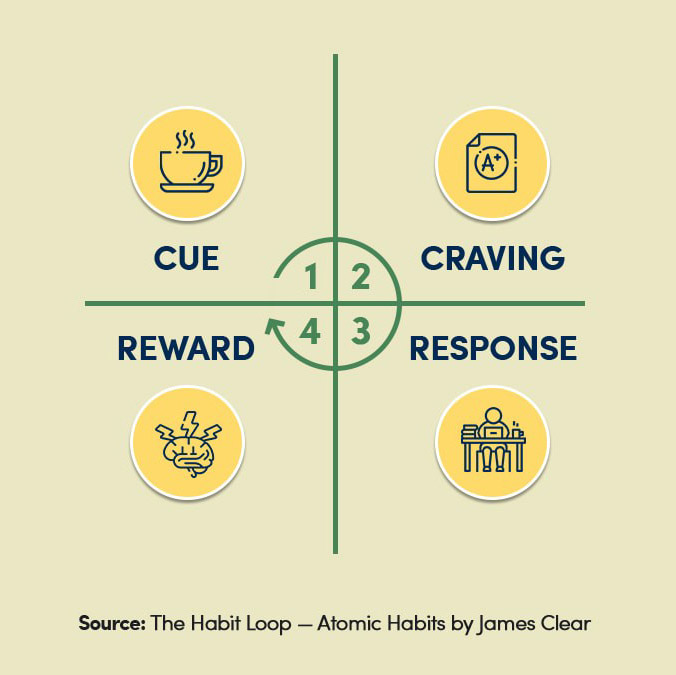
One of the main reasons we avoid tasks, fall behind, or can’t maintain habits is because it feels like a fight. There’s friction. According to Atomic Habits by James Clear, there are four foundations to building better habits:
- Cue: Set up cues in your environment that remind you and make it hard to miss the task.
- Craving: Pair the habit with something you enjoy or that motivates you.
- Response: Reduce friction by breaking big tasks into smaller, more attainable pieces.
- Reward: Make it satisfying by attaching the habit to an immediate reward.
Now let’s apply this framework to your accounting.
Define the Habit
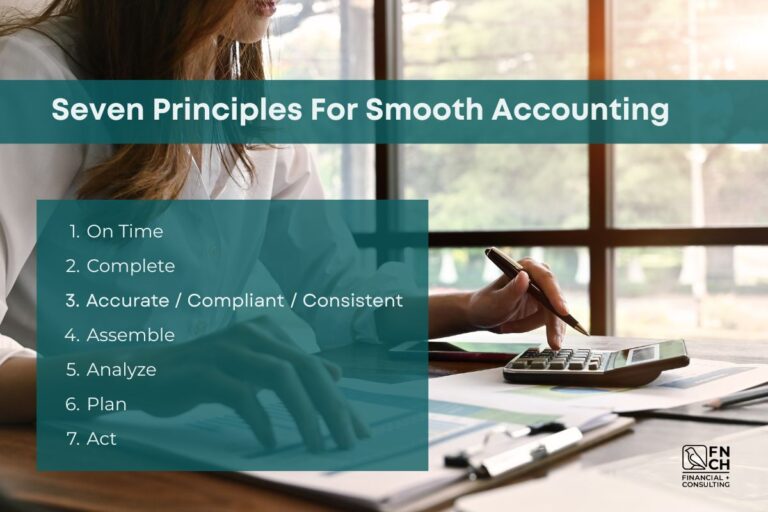
In accounting, we say you need financial information that is accurate, complete, compliant, consistent, and on time so you can make decisions with confidence. I like to expand this into seven principles every business owner should build into their accounting rhythm:
- On Time
- Complete
- Accurate / Compliant / Consistent
- Assemble
- Analyze
- Plan
- Act
Repeat.
01 | On Time
Monthly or quarterly, complete the steps below. Monthly is recommended; quarterly is the minimum.
02 | Complete – Bookkeeping
(Nothing missing. Everything captured.)
This step is about capturing everything that happened in the business during the period. All income, expenses, and activity need to be entered so nothing is left out before reviewing the numbers.
Complete bookkeeping ensures:
- All cash activity is recorded
- Customer and vendor activity is reflected
- Payroll, loans, and owner transactions are included
- There are no gaps in the period being reviewed
Complete means all activity for the period is captured before moving into the monthly close.
03 | Accurate / Compliant / Consistent – Monthly Close
(Nothing wrong. Nothing misclassified. Same rules every month.)
The monthly close is a separate step from bookkeeping and is where the numbers are validated. This is the process of reviewing, reconciling, and adjusting the books to ensure the financials are reliable and consistent from month to month.
The monthly close is where we prove the numbers. Ensuring the financials are accurate, compliant, and consistent before they’re ever used for analysis or planning.
During the monthly close:
- Accounts are reviewed and reconciled
- Revenue and expenses are evaluated for proper timing and classification
- Adjustments are made to ensure compliance and consistency
- The financials are checked for accuracy and reasonableness
Want the Full Checklist?
This is the same checklist we use with our advisory clients.
If you want access to our comprehensive bookkeeping and monthly close checklist and guidance on how to apply it, schedule a discovery call with FNCH and gain access to the same checklist we use with our advisory clients.
04 | Assemble
Prepare and review a financial statement package, including:
- Profit & Loss
- Balance Sheet
- Cash Flow
- Accounts Receivable
- Accounts Payable
Bonus:
- Prepare a budget-to-actual analysis if you have a budget in place
- Prepare key performance indicators (KPIs), both standard and industry-specific
05 | Analyze
Spend time reviewing the full financial package. Compare historical results against predicted future events. Write a summary of:
- What happened
- What you expect will happen next
Bonus: Review KPIs and budget-to-actual results to understand where intentions differed from reality and improve future decision-making.
06 | Plan
Based on your review, plan your:
- Cash flow
- Investments
- Business growth
- Capital purchases
- Tax strategy
07 | Act
Move forward in your business daily, confident that your decisions are backed by historical facts and a planned future.
Repeat.
Putting the 4 Foundations Into Practice in Your Accounting
Now that we’ve defined what the accounting habits are, let’s talk about how to actually stick to them. This is where the four foundations from Atomic Habits come back into play à and where most business owners struggle.
Cue
Plan ahead and make your accounting hard to ignore. Block time on your calendar in advance for each part of your accounting rhythm. If this isn’t the best use of your time, delegate it to a bookkeeper who completes the work on a consistent cadence.
Even if bookkeeping is outsourced, you should still calendar block time to review, analyze, plan, and act on the financials.
Craving
Pair your accounting time with something you enjoy. Sit down at a clean desk, head to a coffee shop, grab a latte or matcha (maybe a cinnamon roll), and focus. Attaching the habit to something enjoyable reduces resistance and makes it easier to maintain.
Response
Swallow the elephant one bite at a time. Sticking to a monthly or quarterly cadence prevents accounting from becoming a once-a-year fire drill. Smaller, consistent efforts reduce friction and make the process manageable.
Reward
You did it. You followed your accounting rhythm and completed the cycle. Reward yourself à small rewards along the way and a bigger one at year’s end. As my dad always says, “If there is fun worth having, you should have it.”
Summary
In this article, we walked through the seven habits every business owner should implement to build a strong, repeatable accounting rhythm à from completing the books on time, to closing them accurately, to using the numbers to analyze, plan, and act.
We also tied those seven habits to the four foundations of good habits: creating clear cues, attaching motivation, reducing friction through consistency, and rewarding follow-through. When accounting habits are designed this way, they stop feeling like a fight and start creating real traction in your finance department.
Ready to Reset Your Accounting Habits?
If you want access to our comprehensive bookkeeping and monthly close checklist and guidance on how to apply it, schedule a discovery call with FNCH and gain access to the same checklist we use with our advisory clients.
Disclaimer:
This blog is for informational purposes only and does not constitute legal, tax, or financial advice. Every business is unique, and laws may vary by location. We recommend consulting with a qualified professional to address your specific circumstances before making any final decisions related to starting or managing your business.